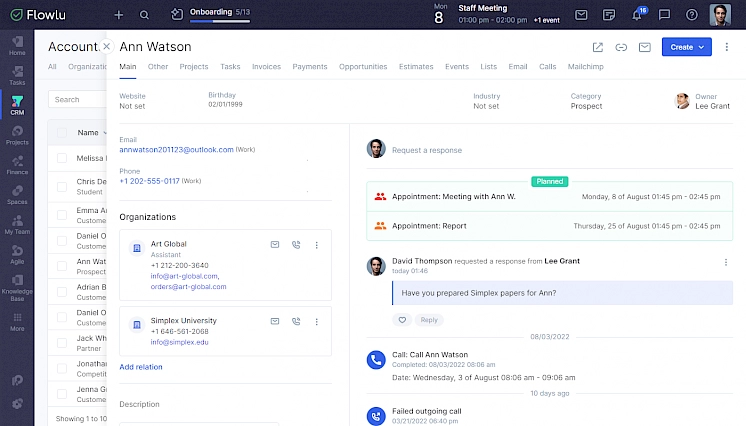
In a highly competitive real-estate market, the capability to efficiently capture, nurture, and convert leads is what differentiates between top performers and the others. Leads are vital to a real-estate business but are prone to volatility, difficult to manage, and spread across many platforms. CRM software addresses this problem by turning a chaotic inflow of inquiries into a well-organized, strategic process. Lead management transforms from a basic system of storing contact details into an intelligent system that is able to prioritize, personalize and automates. CRM is a highly effective instrument that can automate the process of its success. For realtors who fight to win every sale, CRM is much more than only a tool for organization. The following ten tips will show you how CRM can improve lead management. Agents are able to respond quicker and more effectively, closing more deals in even crowded markets.
1. Centralizes Leads from all Sources into One Database
Leads for a realtor come from a myriad of sources, including Zillow and Realtor.com as well as personal websites, social media sites and open houses as well as personal suggestions. Controlling these leads without a CRM is having to manage text messages, email, notes and dashboards from multiple platforms. CRM functions as a hub to all leads. It uses integrations and automated forms to funnel them into a centralized database. This reduces the chance of leads "falling into the wrong hands", in an inbox that is overflowing with.
2. Assures that follow-ups are automatic and prompt
The speed of lead is perhaps the most important aspect in converting. Research has repeatedly demonstrated that getting new leads in touch within minutes can increase the engagement. The initial contact can be automated through a CRM. It will send a customized message or email to a lead as soon as they submit an application. This immediate reply which is challenging to maintain manually around the clock, shows professionalism and an eagerness to assist. The agent stands out from the competition, who may take days or even weeks to reply.
3. Implements Intelligent Lead Scoring and Prioritization
There are many different sales leads that are identical. A rookie agent can spend hours chasing a casual visitor, while an eager buyer remains cold. Through lead scoring CRM software can provide information-driven insight. It automatically assigns points to leads according to their behaviour (e.g. the number of times they have viewed the high-value list and frequent web-based visits) and explicit information from forms (e.g. timeline and budget) and engagement levels. It creates a ranking list of leads where the most popular, most qualified leads surface to the top. This method ensures that a realtor's time and effort are devoted to leads with the highest probability of closing.
4. Lead nurturing with drip campaigns: A systematized approach to lead nurturing
Many leads in real estate aren't ready to buy right away. The process of nurturing those leads for the long term is essential for a strong pipeline. CRMs automate the process of nurturing them with customizable drip-marketing campaigns via SMS and email. A new lead can be automatically enrolled into a series that provides valuable content, such as neighborhood guidebooks, home maintenance tips, or market analysis--over months or weeks. This "set-it-and-forget-it" system keeps the agent top-of-mind, builds trust, and ensures the lead is warmly nurtured until they are ready to activate.
5. The system tracks all interactions to provide a personalised Communications
Personalization is essential in a highly competitive industry. A CRM keeps track of every contact a lead makes with you, including every text message that is sent and received, each call (with notes about the topics talked about) and all text messages, and any properties you have viewed. An entire history of the interaction is accessible to the agent prior to when they communicate with anyone. Agents are able to refer to prior conversations ("How was your son's play of soccer?"). Then they can refer back to past conversations ("How did your son's soccer game go? of soccer?") This kind of engagement will help to establish a rapport with leads and make them feel appreciated.
6. Promotes a trigger-based, behavioral marketing
Advanced CRMs send relevant and timely emails by using triggers that are triggered by behavior. If a person visits repeatedly a particular property CRMs are able to contact them containing additional details or similar listings. If the property they saved is reduced in price and the system is notified immediately, it will notify them. This method of marketing that is reactive indicates that the agent is aware of the unique desires and requirements of the prospective lead and is working on their behalf. Engagement rates and conversions are increased significantly.
7. Segments Audiences for targeted Messaging
It's not efficient to employ a one-size-fits all method of communication. A CRM allows real estate agents to segment their lead databases into distinct categories that are based on criteria like geographic location, buyer/seller status and price point. This permits highly-targeted advertising. Real estate agents for example, could send only leads who are interested in premium properties an "invitation to seminar" for first-time home buyers. A targeted message is more engaging and relevant. It will also position the agent as an expert.
8. An image pipeline is included to track the progress.
A visual sales pipeline, often it's a Kanban board, turns lead management from an abstract concept into a concrete, easily manageable process. Leads can easily be transferred between different stages, such as "New Lead,""Contacted,""Appointment Set," "Negotiation,"and "Closed." The realtor is able to see in a glance what their company is doing in terms of how many leads are being received and where bottlenecks have erupted and how many are getting close to the end of their journey. This data is essential for forecasting and managing workflow.
9. It seamlessly integrates into prospecting tools
Agents must prospect actively to build their lead database. Mojo and Cole Realty Data integrate seamlessly with a robust CRM, allowing the importation of for-saleby-owner leads or listings that have expired. Once they are imported, the leads can be placed into a specialized, aggressive drip campaign to convert them into clients. This integration creates an efficient flow from prospecting to nurturing and maximizes the outbound efforts of agents.
10. Data-driven insights that can be used for ROI analysis
By providing high-quality analytics, CRMs turn lead management from a chore into a science. It is able to produce reports that show which lead sources are responsible for the most closed transactions and highest value transactions. It allows real estate agents to look beyond the superficial metrics such as total number leads in order to make educated marketing decision-making. By focusing on the channels that produce the highest ROI, and eliminating the underperformers, agents can optimize lead generation strategies to achieve maximum profit and competitive advantage. View the most popular my response for best crm for real estate for blog info including crm system application, sales & crm, crm software for real estate agents, crm for real estate agents, crm means what, crm in real estate industry, ai and crm, marketing for real estate companies, crm platform, business crm and more.
Top 10 Crm Implementation Challenges For Realtors And How To Overcome Them
Any real estate professional is advised to think about adopting the use of a CRM (Customer Relationship Management) system. But, the path to adoption can be difficult. In spite of the promise of better sales and workflows, a lot of CRM initiatives do not reach their full potential. This is due to a range of common, but solvable issues. These problems are usually not focused on technology. They're more about people, process management, or planning for the future. In addition to internal conflict and chaos within the data, there are also difficulties with training and a lack of clarity in goal setting. For realtors, these issues can cause a significant amount of expense and an ineffective platform. Being aware of and addressing these issues early is key. Brokers and agents who take an approach of strategic and proactive can successfully navigate the process of implementation, turning potential roadblocks in to stepping-stones for a more organized, efficient and lucrative business. The following 10 points outline the most common challenges encountered when implementing CRM and offer concrete, specific strategies for overcoming these challenges.
1. Resistance to Change and Low user acceptance
Challenge: The most significant issue is usually the human factor. Agents are a creature of habit and are hesitant to abandon their familiar, if inefficient, methods (like spreadsheets, sticky notes and personal emails) to try a unfamiliar, complex system. This resistance manifests itself as poor adoption of the CRM, which results in an inefficient investment.
To overcome it To overcome it, the management must be the champion of the change and explain the "why" of CRM. Participate in the decision-making process to make sure that they are on board. To create stories of success, start with an enthusiastic group of pilot users. It is crucial to provide regular training that is specific to each role and demonstrate the benefits of CRM, which includes how it helps reduce time and money.
2. Poor data quality and data migration quality
The challenge: Many people try to move years of unorganized, messy data from different sources -- outdated spreadsheets, old email contacts, scribbled notes--directly into the brand new CRM. This "garbage is garbage" approach creates confusion from the beginning which reduces the confidence of the user and making the system appear to be inaccessible.
Overcoming It - Give some time, prior to moving, to a data cleaning. Get rid of duplicate contacts as well as standardize formats and update outdated details. Consider a stepped migration. Start with the active contacts and then the Sphere Of Influence. Leave behind any old data. A clear, precise and well-organized database is an effective tool; a unorganized and inaccurate one can be risky.
3. A Training that is not adequate or is only provided once
Problem: Many brokers make the obnoxious mistake of offering a single training session, and then assuming their agents to be skilled. Real estate can be difficult work. Without constant support, agents will quickly forget what they've learned. They might also become dissatisfied and slip back into their the old routines.
Overcoming It: Implement a multi-phase training program. The program will begin with "how-to training sessions". After the initial training, additional sessions can be offered 2 weeks after users are familiar with the fundamentals. Offer specific training to the team's leaders as well as individual agents. Create a library of brief videos that can be searched to learn on-demand specific tasks.
4. Lack of Standardization and Clear Processes
A CRM is an execution tool, but not the entire process. If workflows aren't specified, agents may use the system in a variety of ways, or not in any way. There is no standardization of the way to handle a new lead or client and how to manage sales or maintain existing clients. This can lead to inconsistent information.
To overcome this issue, document and share the standard workflows prior to going live. Make a clear, written procedure: "When Zillow leads are received, step #1 is X and step 2 is Y." Automate and design task templates to build these steps into your CRM. This will ensure consistency and the CRM is the only way to go for every business processes.
5. Insane complexity and feature bloat
Problem: To choose the "best" company, it might select a CRM system that offers hundreds of features. Faced with a complex interface and features they aren't familiar with, users become overwhelmed and paralyzed which can lead to abandonment.
To overcome it, adopt a crawl, walk, and run method. During initial training, focus only on the core elements that are necessary for everyday work: making a contact, tracking an activity, and using the mobile application. Once you're confident with the basic features, add more advanced ones like automation and reporting. By modifying dashboards, you can simplify the user interface and show only pertinent details.
6. Failure to Integrate Daily Habits
The CRM is viewed as an independent tool, not the central hub of business. Agents still utilize personal notes and email and update the CRM only sporadically. The result is that the data it collects is insecure.
To overcome it, make sure that CRM be solely the truthful source. Make it a requirement that all communications with clients be logged. Create a CRM homepage for each agent. Make CRM use as one of the first and final chores of the day. Through integrating it into daily routines, it becomes an essential habit.
7. Unrealistic Expectations and Poor Patience
Problem: A lot of people believe that CRM will bring in new customers instantly. When they don't get immediate results, they get dissatisfied and leave. They don't grasp that the ROI comes in time, with regular use and better efficiency.
Overcoming It: Establish realistic expectations, in phases, right from the beginning. Tell your team members that the first three months will be utilized to train and migrate data. In the following quarters, ROI will be realized through improved lead conversion as well as reduced time and stronger client relationships. Recognize early successes and even small wins to maintain going.
8. Ignoring Mobile Functionality
Challenge: Although real estate is a business that can be mobile, a CRM that does not have a quality mobile app is likely to fail. If agents can't easily access their contact information, record a phone call after an event, or even check their tasks from their smartphones, they won't make use of it when they require it.
Prioritize mobile accessibility during choice of CRM. Training on mobile apps should include the mobile app. Demonstrate how to perform critical tasks in the field, such as clicking to call to make a voice call, entering feedback into the app and sending documents using eSignature.
9. Insistency on Ongoing Support and Internal Champions
Immediately after the initial implementation There will be some immediate questions. A decrease in use and frustration can be the result if support isn't easily accessible. Your broker shouldn't be the only source of help.
Overcoming It: Identify and empower "CRM Champions"--tech-savvy agents or staff who receive advanced training. These champions become the primary line of defense in responding to frequently asked questions. Create a CRM channel (e.g. Slack or a shared mailbox) to promote collaboration and agents to help each other.
10. There is no follow-through or accountability
Challenge: The implementation process is treated as a one-time project with no long-term strategy. There is no system for to determine if the agents are using the CRM in a correct manner or even actually using it. A lack of accountability will result in a decrease in the rate of adoption.
To combat this, managers must use CRM reporting features to measure the use. Create reports about user log-in frequency or task completions as well as recording activity. Teams should meet frequently to review the process of CRM. The usage of the system will become a part and parcel of your business. This creates a culture of accountability where using the system is non-negotiable. Follow the recommended the original source about best crm for real estate for more advice including free crm for realtors, sales management software, crm and marketing automation, real estate customer management software, real estate software, crm management software, marketing for realtors, customer relationship management software for small business, marketing and automation, crm tools for small business and more.